- China Insights Weekly | AI, Innovation, Business & Tech in China
- Posts
- 2025 decoded: the moments that defined China
2025 decoded: the moments that defined China
A recap of the biggest stories and defining trends of this year



Hermes Galvao, Tomas Kucera & Yereth Jansen
January 04, 2026
Welcome back to China Insights Weekly. 2025 has come to a close, and what a year it was! From AI breakthroughs and trade tensions to pop culture moments and record-setting milestones, the past twelve months offered numerous moments that shaped the conversation in and around China.
As we start a new year, let us look back at all those moments and see how far we’ve come!
📆 12 Highlights of the Year
Chinese startup DeepSeek released an open-source AI model that matched OpenAI’s latest models on math, coding, and reasoning tasks at 95% lower cost. This move stunned the tech world, wiping $1 trillion in US technology value, including $600 billion from NVIDIA, the largest single-day loss in history.
Released for Lunar New Year, Ne Zha 2 premiered to record-shattering success. It grossed $2.2 billion worldwide, becoming the highest-grossing animated film ever, and the first non-English movie to top $2 billion. This phenomenon had Chinese audiences buzzing and drew global attention to China’s flourishing animation industry.
Formula 1 roared back to China after a 4-year hiatus with the Chinese Grand Prix in Shanghai drawing a record 220,000 spectators over the weekend, showcasing China’s revived consumer confidence and sending a clear message that large-scale events are truly back post-pandemic.
President Xi Jinping urged China to accelerate “self‑reliance and self‑strengthening” in AI, close the gap with the U.S., and direct more state support toward the industry. This call coincided with Huawei’s plan to start mass shipments of its 910C AI chip, a domestic alternative to Nvidia’s H100.
China’s travel industry roared back during the May Day holiday, with tourism revenue and trips surpassing pre-pandemic levels. Analysts projected 2025 would be a record-breaking $1 trillion year for domestic and outbound travel, fueled by pent-up demand, and the visa-free policy that expanded to allow citizens of 130 countries to enter China without a visa, including on transit.
By June, China had added 212 GW of new solar capacity in the first half of 2025, more than double the addition a year earlier. Analysts noted this surge would keep China on track to exceed its 2030 renewable targets.
After taking over the domestic market, Chinese chain Luckin Coffee quietly opened stores in New York City. Its ultra‑cheap US$1.40 lattes and viral marketing stunts signalled a bold challenge to Starbucks in its own home soil.
In a sign of shifting global auto dynamics, Volkswagen deepened its alliance with Chinese EV maker Xpeng, with both companies expanding their partnership to collaborate on R&D, jointly develop new EV models and invest in the firm. The move sparked debate over the indispensability of Chinese EV tech for Western brands.
Chinese automaker BYD stunned car enthusiasts by beating the world speed record for production cars, with its hypercar U9 Xtreme reaching 496 km/h (308 mph). This accomplishment grabbed global headlines, with experts debating what this means for the supercar pecking order.
At the Party’s 4th Plenum, leaders approved the blueprint for China’s 15th Five-Year Plan, prioritizing high-quality growth and tech self-reliance, with ambitions to extend EV and solar success into chips, biotech and quantum.
Moonshot AI’s Kimi K2 outperformed OpenAI’s GPT-5 on several benchmarks while costing a fraction of GPT-5’s cost. Excelling in coding, exams, and tool use, Kimi K2’s open-source availability and ultra-low training budget raised eyebrows globally
By year’s end, China’s export machine reached new heights, with its annual trade surplus on pace to hit $1.2 trillion, the largest ever. Despite soft domestic demand, exports stayed strong, nearly doubling the surplus from just four years earlier.
The Five Themes that Shaped 2025
🤖 Artificial Intelligence: A Year of Open‑Source Disruption
The year began with a bang as Beijing start‑up DeepSeek released its open‑source R1 model, matching GPT‑level performance at about 95 % less training cost, shaking global tech markets and wiping out $1 trillion in value in the US stock exchange. Within weeks, Alibaba’s newly released Qwen 2.5‑Max vaulted to the top of benchmarks. Springtime saw new updates from DeepSeek and Alibaba, as well as the release of Manus, a fully autonomous agent. Mid‑year saw Baidu and Huawei open‑sourcing their own flagship models, pledging to cut deployment costs by 60–80 %. Paired with President Xi Jinping’s call for AI self‑reliance, this signalled state backing for this open‑source pivot. July brought Moonshot’s Kimi K2, an open‑source model with enhanced coding and agent integration, which went on to outperform ChatGPT in some benchmarks. Setting the stage for 2026, millions adopted open‑source models, cementing China at the forefront of global AI.
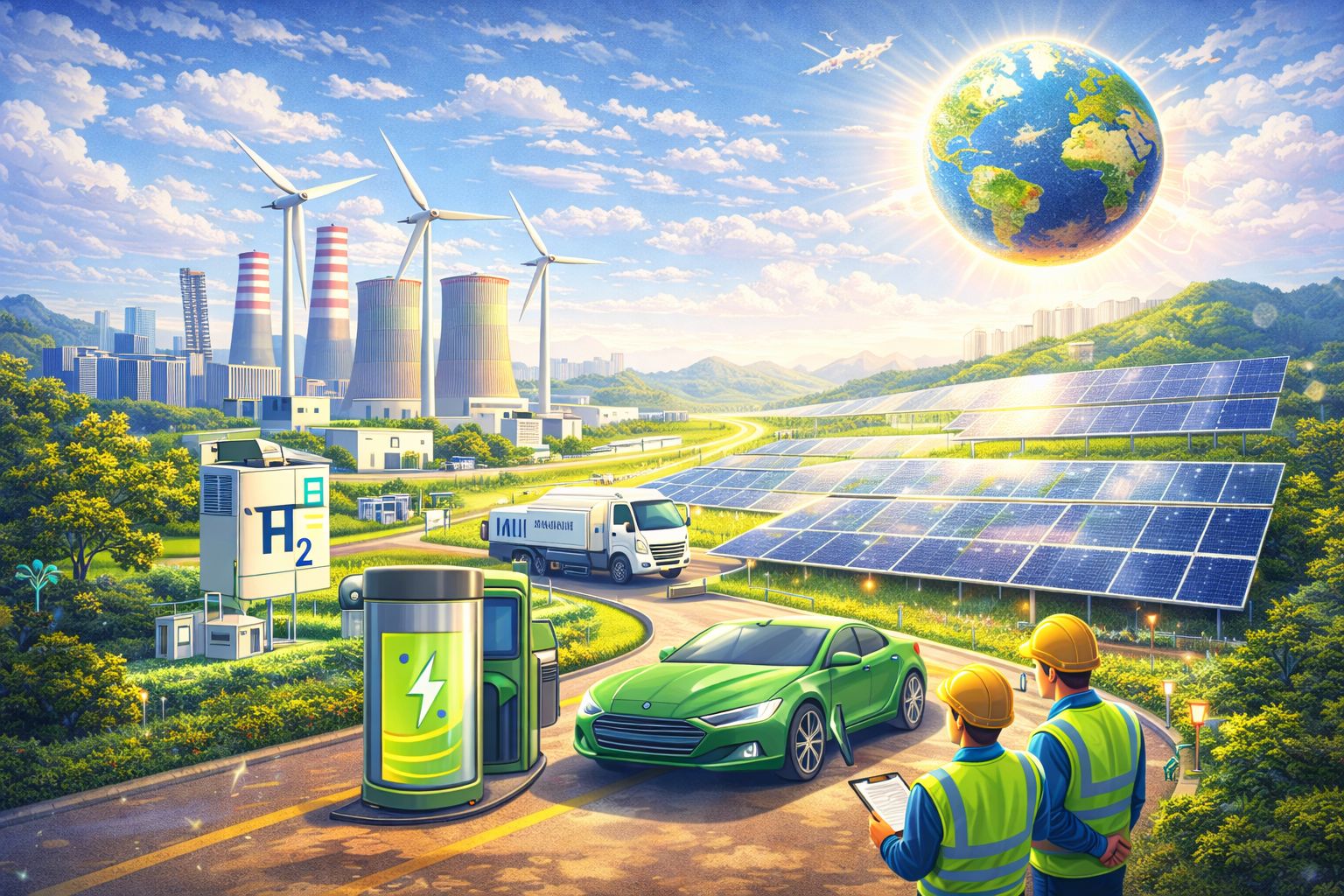
🔋Green Industrial Power: Batteries, Solar, Hydrogen, and EVs
China’s green push in 2025 went far beyond cars. By April, regulators approved ten new nuclear reactors worth roughly US$27 billion and installed 212 GW of new solar power. Spring also saw batteries become the most lucrative clean-energy export, bringing in US$60 billion, outpacing EV revenue. Meanwhile, firms pursued global expansion with clean-energy investment abroad nearly doubling, hitting US$80 billion in 2025. By October, NEVs captured 52 % of China’s new‑car sales and roughly 60 % of global battery‑EV sales. Towards the end of the year, scientists achieved a major step towards 4th-generation nuclear energy, building the first-ever thorium-powered reactor, which offers higher safety and reduces mechanical stress.
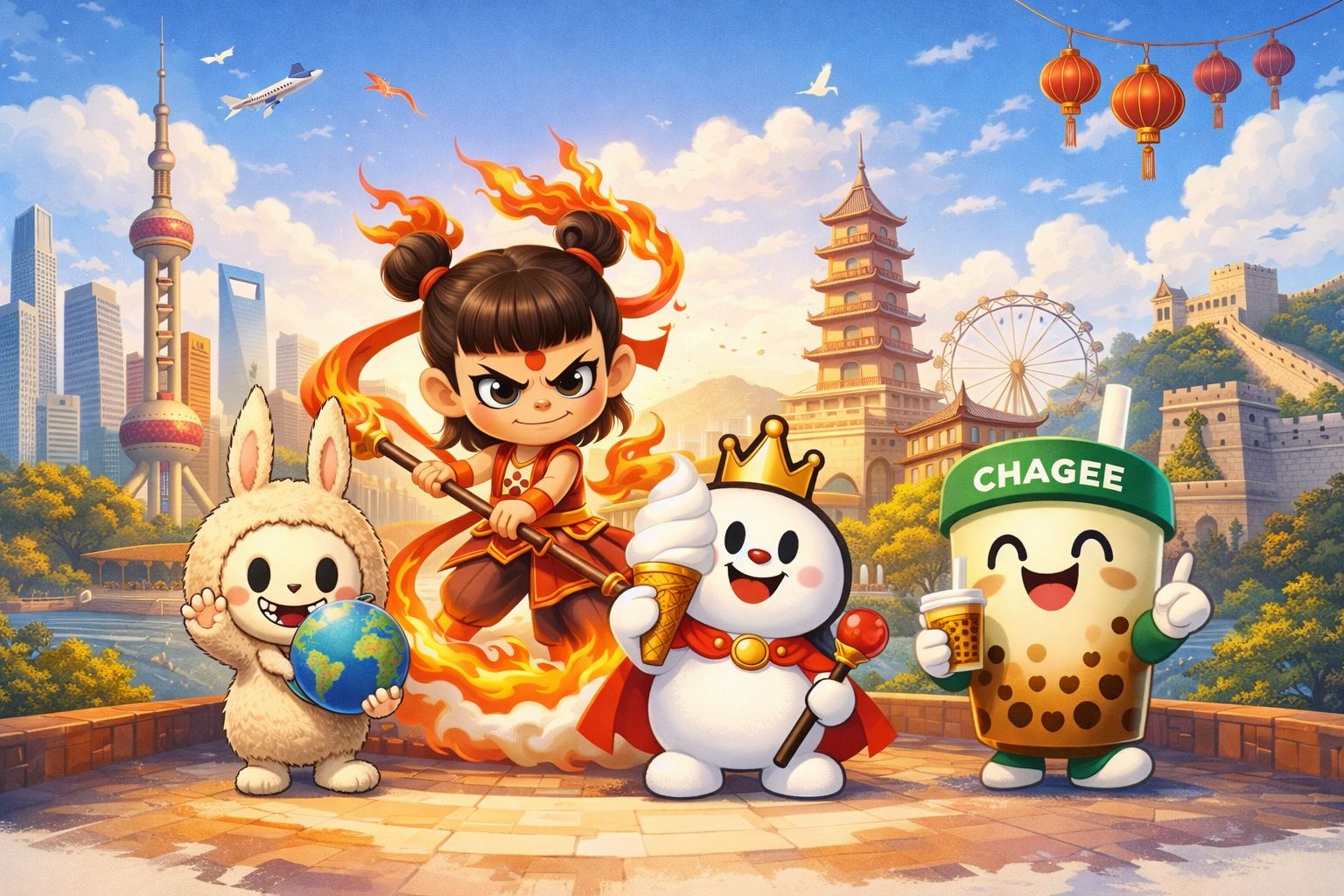
🧋From Labubu to Bubble Tea: How China’s Brands Went Global
2025 proved China’s cultural exports could rival its tech and industrial achievements. In January, the short-term US TikTok ban sent more than 3 million Americans to Chinese platform RedNote, where newcomers and veteran users swapped recipes and job tips, creating a never-before-seen cultural exchange. Weeks later, animated movie Ne Zha 2 set box‑office records domestically and worldwide, bringing in over USD 2.2 billion and topping global animated film charts. In June, Pop Mart’s Labubu figurine went viral, making profits jump 396 %, and shares rise 83 % as celebrity fans and people all over the world embraced the character. Meanwhile, Chinese brands set out to convert American palates, with chains Luckin, Chagee, and Mixue opening shops in the US. This shows that 2025 was the year China’s soft power broke into Western cultural markets.
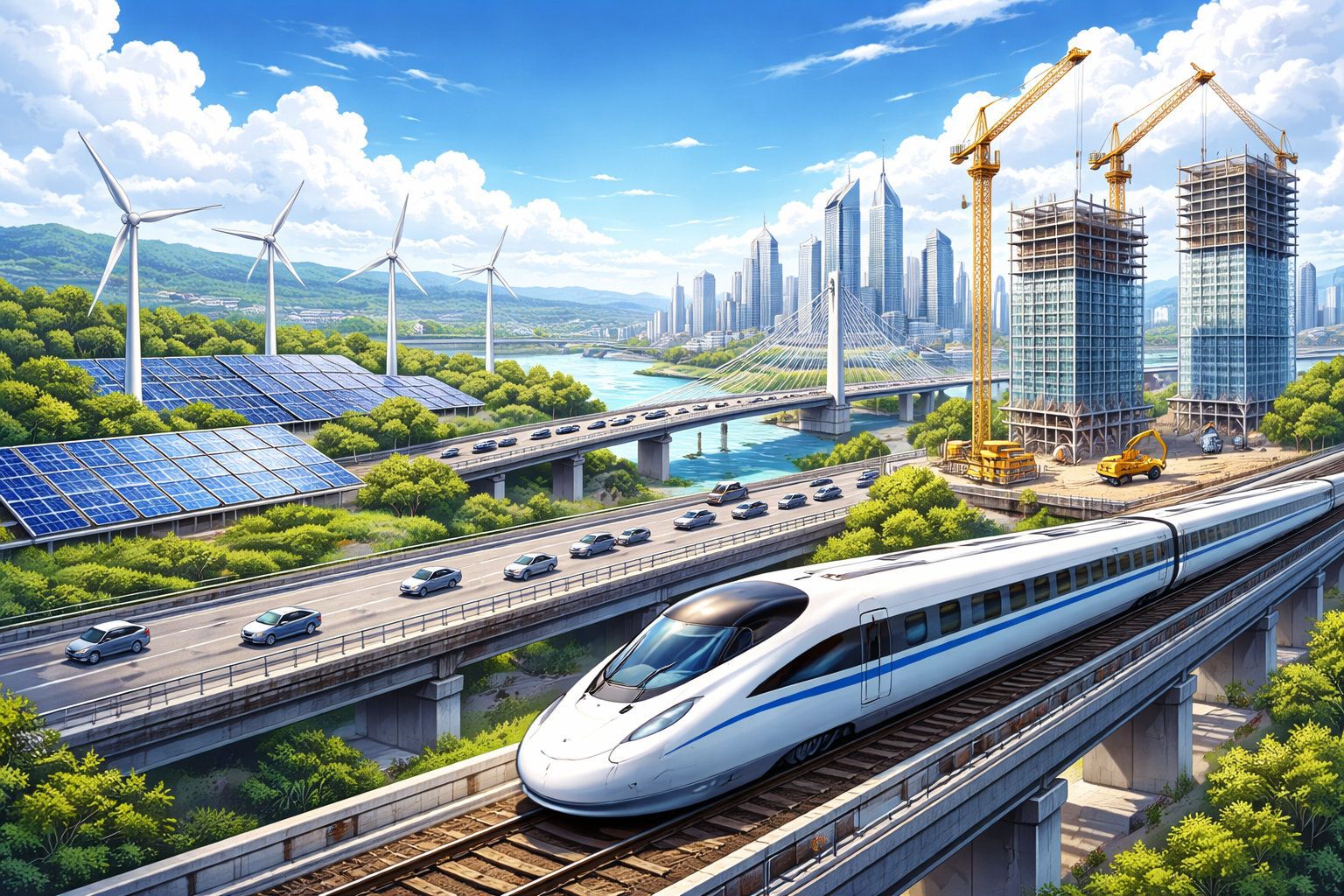
🏗️ Infrastructure: High Bridges, Railways, and Record Investments
2025 was a big year for Chinese infrastructure. At the beginning of the year, China’s grid investment jumped 33%, and Huawei opened a 100 MW supercharging hub for 700 heavy‑duty trucks a day. Abroad, major Belt-and-Road rail projects were launched, including a 391 km line in Vietnam and a 609 km high-speed line linking Thailand to China. Finally, the end of the year brought two world records. First, the inauguration of the Huajiang Grand Canyon Bridge in September, whose roadway sits at 625 m, making it the world’s highest bridge, and the opening of the Tianshan Shengli tunnel, which spans 22.13 km, and becomes the longest expressway tunnel in the world. Together, these projects and record investments show how 2025 was a landmark year for China’s domestic and international infrastructure ambitions.
🧬 High Tech: Biotech, Brain Chips, and Robotics
China’s biotech landscape exploded in 2025, with Chinese companies accounting for around 50% of global innovative drug business development deal value, as drugmakers struck big out-licensing deals. Fosun Pharma sold rights to a chronic lung-disease therapy for USD 645 million, while CSPC Pharma licensed a GLP-1 weight-loss drug for USD 2.1 billion. By mid-year, U.S. firms had inked 14 deals worth up to US$18.3 billion, highlighting the appeal of Chinese R&D. Meanwhile, digital health surged as SinoMed’s stent system won FDA Breakthrough Device status and JD Health announced plans for 1 000+ AI‑powered “digital doctors”. The end of the year saw Beinao No. 1, a brain chip that enables patients to control robotic arms and computers. Chinese researchers implanted a semi-invasive brain chip in three paralyzed patients, with a 50-patient trial slated for 2026. Robot services went mainstream as “Robots-as-a-Service” platforms expanded, capped by Unitree humanoids performing synchronized flips at Wang Leehom’s Chengdu concert.

🎆 That’s a wrap on 2025
Thank you for reading, sharing, and thinking with us over the past year. We’ll be back in 2026 to keep highlighting the Insights, decoding the noise, and following China’s evolving role in the world. Until then, we wish you a happy New Year!
👥 About us
China Insights is brought to you by Tomas Kucera and Yereth Jansen, CEO at Darling Advertising + Design in Shanghai. Also, follow us on LinkedIn, X or Facebook.
Reply