- China Insights Weekly | AI, Innovation, Business & Tech in China
- Posts
- Robots Steal Spring Gala 🤖 AI Voice Commerce Booms 🛒 Anta Opens US Flagship 👟
Robots Steal Spring Gala 🤖 AI Voice Commerce Booms 🛒 Anta Opens US Flagship 👟
China Insights Weekly for February 23 Unpacking China’s economic and technological advances.


Tomas Kucera & Yereth Jansen
February 23, 2026

In partnership with

Welcome back to China Insights Weekly. Here are some of the key highlights for this week’s edition:
China grants near-total duty-free access to 53 African nations, trade gap under scrutiny
Fully unmanned container ship completes autonomous docking, smart port milestone
Quantum network stretches 3,700 km, wafer-scale chips enable scaling
China leads global R&D growth at 13.1% CAGR, innovation map redraws
🚀 Headlines
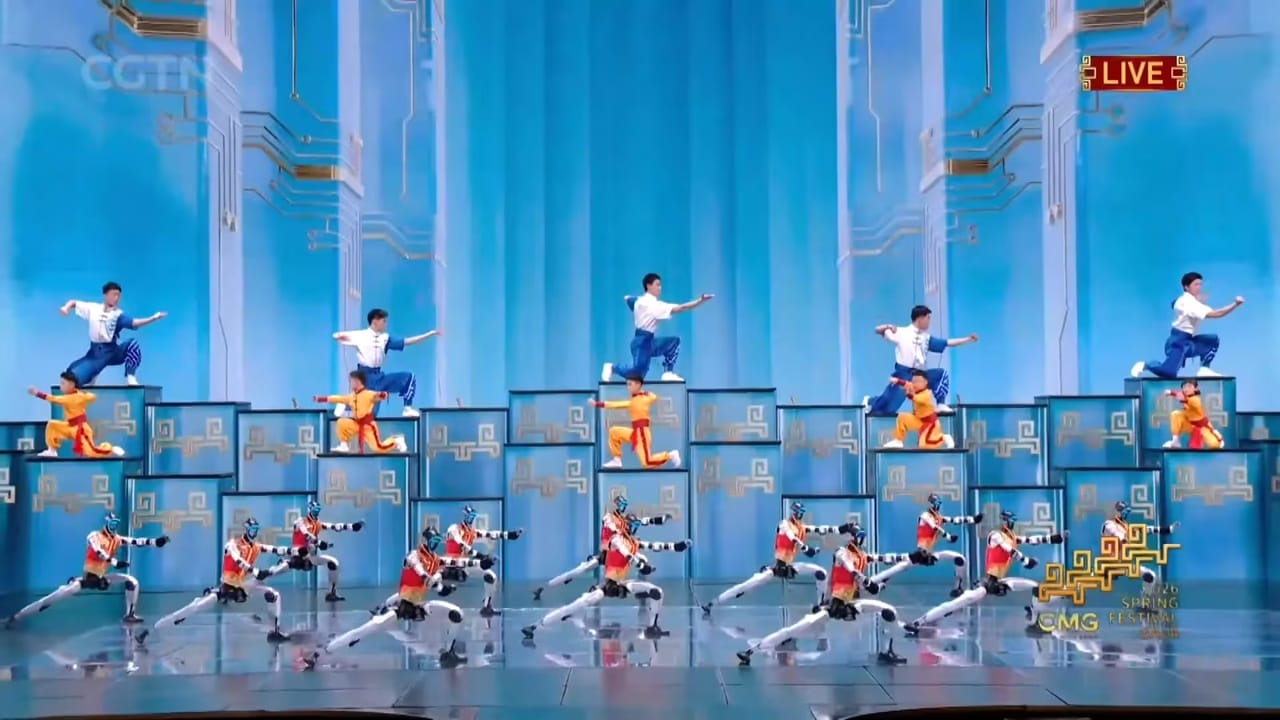
The 2026 CCTV Spring Festival Gala, which is China's most-watched television event of the year, featured humanoids from Unitree Robotics, Galbot, Noetix, and MagicLab, marking a decisive push to integrate robots into mainstream entertainment. Unitree deployed over a dozen G1 robots performing synchronized martial arts with human children, including "drunken boxing" sequences and weapon-wielding, allegedly paying USD 13.7 million (100 million yuan) for sponsorship. Noetix presented its USD 1,400 (9,998 yuan) "Bumi" humanoids in a family comedy sketch, while MagicLab robots performed in the musical "We Are Made in China." The international CGTN Super Night broadcast separately featured AgiBot and PND Botics' "Adam," after AgiBot declined domestic gala participation to host its independent AGIBOT NIGHT 2026 event on February 14.
ByteDance records 1.9 billion AI interactions on New Year’s Eve gala, Alibaba’s Qwen sees 5 billion commands from 130 million users (link, link)
ByteDance’s Doubao AI powered the 2026 Spring Festival Gala to a record 1.9 billion AI interactions on Chinese New Year’s Eve, February 17, 2026. The "Toutiao New Year" activity generated over 50 million New Year-themed profile pictures and 100 million personalized greetings. Computing demand peaked at 9:46 PM when the Toutiao large model achieved 63.3 billion tokens per minute throughput, with ByteDance’s Huoshan Engine ensuring stability through flexible computing allocation. Beyond mass interaction, Doubao’s Seedance 2.0 video generation model was deeply integrated into stage visuals, restoring ink painting brushstrokes in "Riding the Wind Song" and creating individualized floral spectacles for each performer in "Celebrating the Flower Goddess" using an "AI-generated images and real-stage expansion" approach.
Alibaba’s Qwen AI assistant recorded 5 billion "Qwen, help me" voice commands from over 130 million users during its 11-day Spring Festival campaign (February 6–17, 2026), demonstrating deep integration into holiday consumption scenarios. The AI processed orders for bubble tea, New Year goods, movie tickets, flights, and hotels through Alipay. Since the campaign’s second wave launched on February 14, AI movie ticket orders surged 372-fold, with third- and fourth-tier cities spiking 782-fold. Zhang Yimou’s "Silent Awakening" emerged as the top choice. AI ticket orders jumped 22-fold and flight/transportation bookings rose over 7-fold, with nearly half of orders originating from county-level cities. Notably, 4 million users over age 60 adopted AI ordering, as Qwen’s "one-sentence order" feature broke down age and regional barriers, signaling mainstream penetration of voice-activated AI commerce in lower-tier markets.
China has enacted the China–Africa Development Economic Partnership Agreement (CADEPA), granting duty-free access for nearly all products from 53 African countries beginning May 1, 2026. The policy excludes Eswatini due to its diplomatic recognition of Taiwan. Bilateral trade between China and Africa reached USD 222 billion between January and August 2025, up 15% year-over-year. However, a significant imbalance persists: Chinese exports to Africa surged 24.7% to USD 140.79 billion, while African imports to China rose only 2.3% to USD 81.25 billion, creating a nearly USD 60 billion trade deficit. The agreement aims to address this disparity while building on the Belt and Road Initiative's infrastructure investments.
Vibe code with your voice

Vibe code by voice. Wispr Flow lets you dictate prompts, PRDs, bug reproductions, and code review notes directly in Cursor, Warp, or your editor of choice. Speak instructions and Flow will auto-tag file names, preserve variable names and inline identifiers, and format lists and steps for immediate pasting into GitHub, Jira, or Docs. That means less retyping, fewer copy and paste errors, and faster triage. Use voice to dictate prompts and directions inside Cursor or Warp and get developer-ready text with file name recognition and variable recognition built in. For deeper context and examples, see our Vibe Coding article on wisprflow.ai. Try Wispr Flow for engineers.
Chinese sportswear giant Anta opened its first directly operated North American flagship store on February 13, 2026, in Beverly Hills, Los Angeles. 3,000-square-foot location marking a strategic pivot from distributor partnerships to a direct-to-consumer "Brand + Retail" model. The store, designed around "Eastern aesthetics, global expression," showcases Anta’s core product lines, including the Kai series and Hela lifestyle collection, while positioning itself as a "Sports Lifestyle Hub" hosting running clubs, basketball culture events, and technology workshops. The launch coincided with a lifetime partnership announcement with NBA player Klay Thompson, whose signature line will debut through the store, and global ambassador Kyrie Irving attended the grand opening with his Chinese New Year Kai 3 release. The Beverly Hills flagship signals Anta’s ambition to evolve from a domestic Chinese brand into a global sportswear competitor with controlled retail presence in key international markets.

China’s tablet shipments rose 13.1% year-over-year to 33.8 million units in 2025, driven by device replacement cycles and national subsidy policies, according to IDC. Fourth-quarter shipments grew 7.2%, though the stimulus effect showed signs of fading as regional subsidies tightened. The consumer segment led growth with 14.4% annual shipment increases and clear upgrade trends, while the commercial market declined 1.6% due to budget constraints. Huawei Technologies dominated the full-year market with 29.2% share (down 3.1%), followed by Apple at 24.5% (down 2%) and Xiaomi at 13.1% (up 0.4%). In Q4, Apple briefly reclaimed the top spot with 26.7% share, while Huawei fell to 24.9% and Lenovo surged to 13.1% (up 4.9%). Analysts emphasize the urgent need for manufacturers to accelerate AI integration and scenario-based upgrades amid rising cost uncertainties.
Reply