- China Insights Weekly | AI, Innovation, Business & Tech in China
- Posts
- MiniMax AI Tops Chart 🧠 Apple Cuts Fees 🍏 Bubble Tea Theme Park 🧋
MiniMax AI Tops Chart 🧠 Apple Cuts Fees 🍏 Bubble Tea Theme Park 🧋
China Insights Weekly for March 16. Unpacking China’s economic and technological advances.


Tomas Kucera & Yereth Jansen
March 16, 2026
In partnership with

Welcome back to China Insights Weekly. Here are some of the key highlights for this week’s edition:
Lilly commits USD 3B to China, scaling next-gen weight-loss pill output
Science funding rises again, with elite universities and key disciplines expanding
Chinese wind giants take the global top six, led by Goldwind and Envision
World’s largest CAES plant goes live, boosting long-duration energy storage
🚀 Headlines
China's AI large language models weekly usage surpasses global leaders: MiniMax M2.5 remains at the top (link)
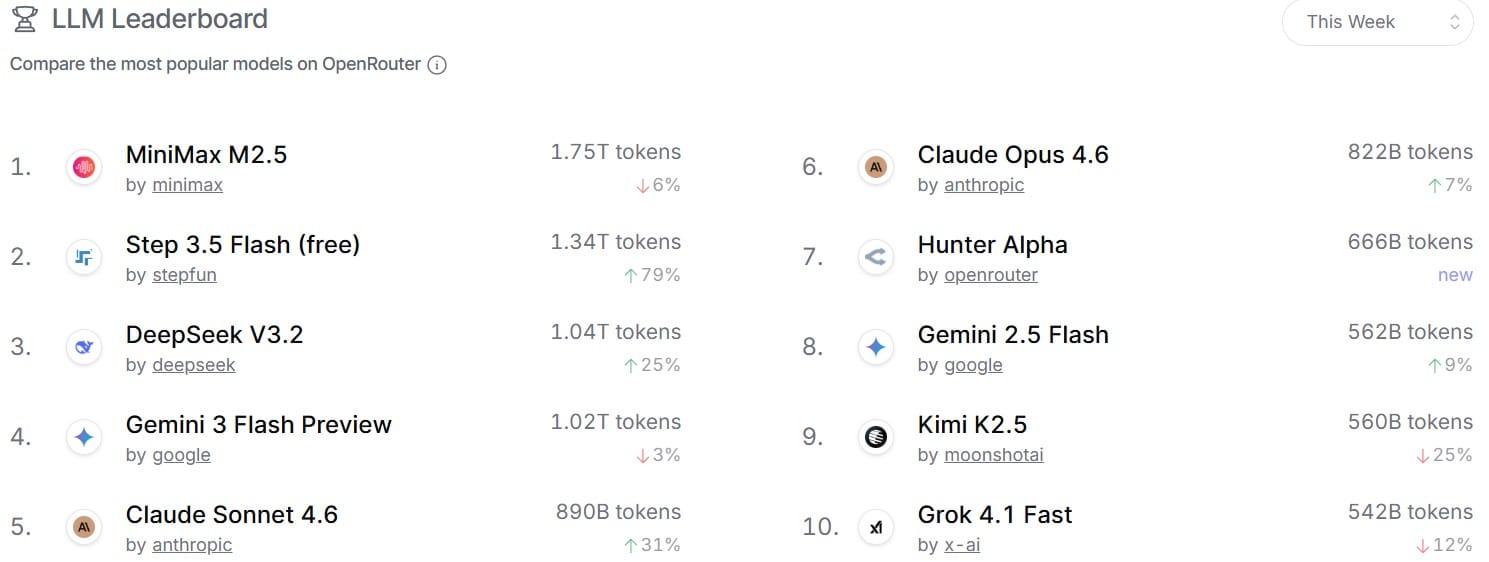
Chinese AI large models recorded 4.19 trillion weekly API calls during March 2–8, surging 34.9% week-on-week and surpassing the United States’ 3.63 trillion Tokens for the second consecutive week, according to OpenRouter data. Chinese vendors now occupy three of the top five global positions: MiniMax’s M2.5 model leads with 1.87 trillion Tokens (up 15%), DeepSeek V3.2 ranks third with 0.83 trillion Tokens, and Stepwise Star’s Step3.5 Flash jumped 69% to 0.75 trillion Tokens in fourth place. Kimi K2.5 declined to sixth with 0.74 trillion Tokens despite an 8% increase. Industry analysts attribute China’s sustained leadership to robust domestic AI application ecosystem activity and improved computing costs.
Lilly to invest USD3 billion in China over next decade to boost next-gen weight-loss pill output (link)
US drugmaker Eli Lilly plans to invest USD 3 billion in China over the next decade to expand production capacity for its next-generation oral weight-loss drug orforglipron, the company’s first oral GLP-1 treatment currently awaiting regulatory approval in the country. The investment includes boosting output at its Suzhou plant, adding new pill capacity in Beijing, and partnering with Chinese contract development and manufacturing organizations. In a separate deal, Lilly will invest USD 200 million in Chinese outsourcing provider Pharmaron to enhance technological capabilities for orforglipron production. The investment is part of Lilly’s largest-ever global capacity expansion program. It aims to build an agile supply chain for the oral therapy, which offers advantages for patients preferring pills or facing cold-chain challenges with injectable alternatives.
China has pledged a roughly 10% increase in science funding for 2026, allocating CNY 426 billion (USD 62 billion) in central government funding and CNY 1.3 trillion in total national fiscal spending—a 7.1% rise from 2025. The government is expanding the “Double First Class” initiative, which supports nearly 150 universities and 500 priority disciplines, with participating institutions adding approximately 38,000 student places over the past two years. The plan emphasizes “original innovation” in fields like artificial intelligence, integrated circuits, and advanced manufacturing, while fast-tracking program approvals. Administrative expenses will be cut by 7–10% to prioritize strategic investments. Overseas study is declining: Tsinghua’s 2025 graduates pursuing further study abroad fell to 8.5% from 9.6% in 2024, while 350,000 new university places were created through more than 540 transnational education partnerships with overseas institutions established over the past two years.
Unlock ChatGPT’s Full Power at Work

ChatGPT is transforming productivity, but most teams miss its true potential. Subscribe to Mindstream for free and access 5 expert-built resources packed with prompts, workflows, and practical strategies for 2025.
Whether you're crafting content, managing projects, or automating work, this kit helps you save time and get better results every week.
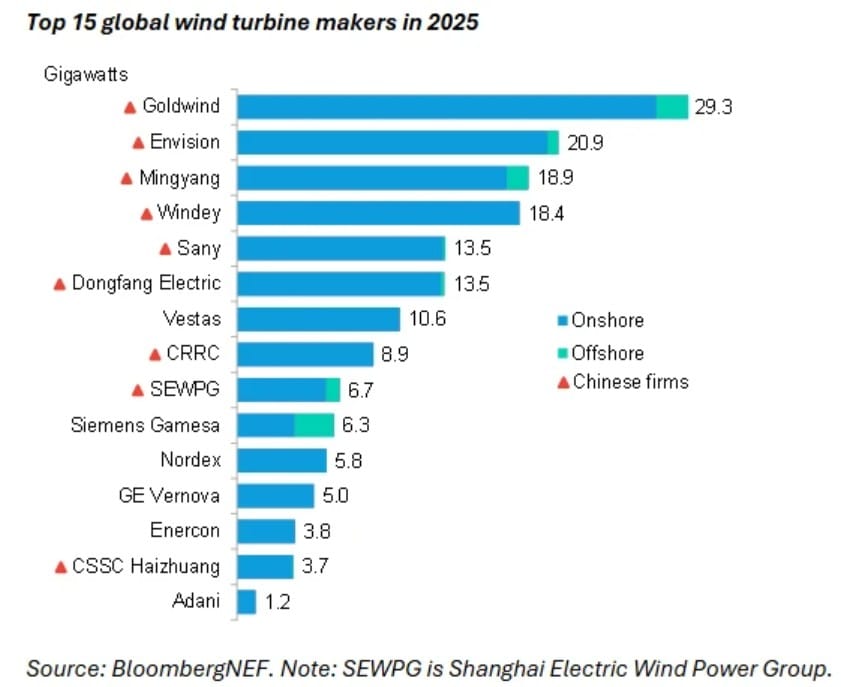
Chinese wind turbine manufacturers captured the top six global positions by new installed capacity in 2025, with Goldwind leading at 29.3 GW, followed by Envision Energy (20.9 GW), Ming Yang Smart Energy (18.9 GW), Windey Energy Technology (18.4 GW), and Sany Renewable Energy and Dongfang Electric Corporation tied at 13.5 GW each, according to BloombergNEF. This pushed Denmark’s Vestas to seventh place (10.6 GW), marking the first time Chinese firms dominated the top six. China’s newly installed wind capacity surged 51% to 126 GW, making it the first market globally to exceed 100 GW in annual additions, while worldwide installations reached 169 GW (up 38%). Chinese manufacturers’ overseas capacity increased eightfold as domestic reliance fell to 93% from 99%, with companies like Envision signing a 630 MW supply agreement in Brazil.
Apple will reduce its mainland China App Store commission fees from 30% to 25% for standard in-app purchases effective March 15, 2026, following discussions with Chinese regulators. Fees for developers in the Small Business and Mini Apps programs will also drop from 15% to 12%. State-owned Economic Daily estimated the reduction could save Chinese developers over 6 billion yuan ($873 million) in annual operating costs and potentially lower consumer prices by nearly 1 billion yuan per year. The policy takes effect on World Consumer Rights Day, one year after reports that China’s state watchdog began investigating Apple’s developer fees. Apple stated the new rates ensure its China terms remain “no higher than overall rates in other markets,” with developers receiving benefits automatically. The move applies to both domestic and international developers, including major players like Duolingo, which generates approximately $50 million annually from the Chinese market.
Reply