- China Insights Weekly | AI, Innovation, Business & Tech in China
- Posts
- Luckin Buys Blue Bottle ☕ JD Europe Launch 🛒 Xiaomi Trillion-Param Model 🧠
Luckin Buys Blue Bottle ☕ JD Europe Launch 🛒 Xiaomi Trillion-Param Model 🧠
China Insights Weekly for March 23. Unpacking China’s economic and technological advances.


Tomas Kucera & Yereth Jansen
March 23, 2026

Welcome back to China Insights Weekly. Here are some of the key highlights for this week’s edition:
Sanofi and AstraZeneca deepen China footprint
Photoresist plant enters mass production
Satellite-linked humanoid control is tested
Smart rice farms lift yields
🚀 Headlines
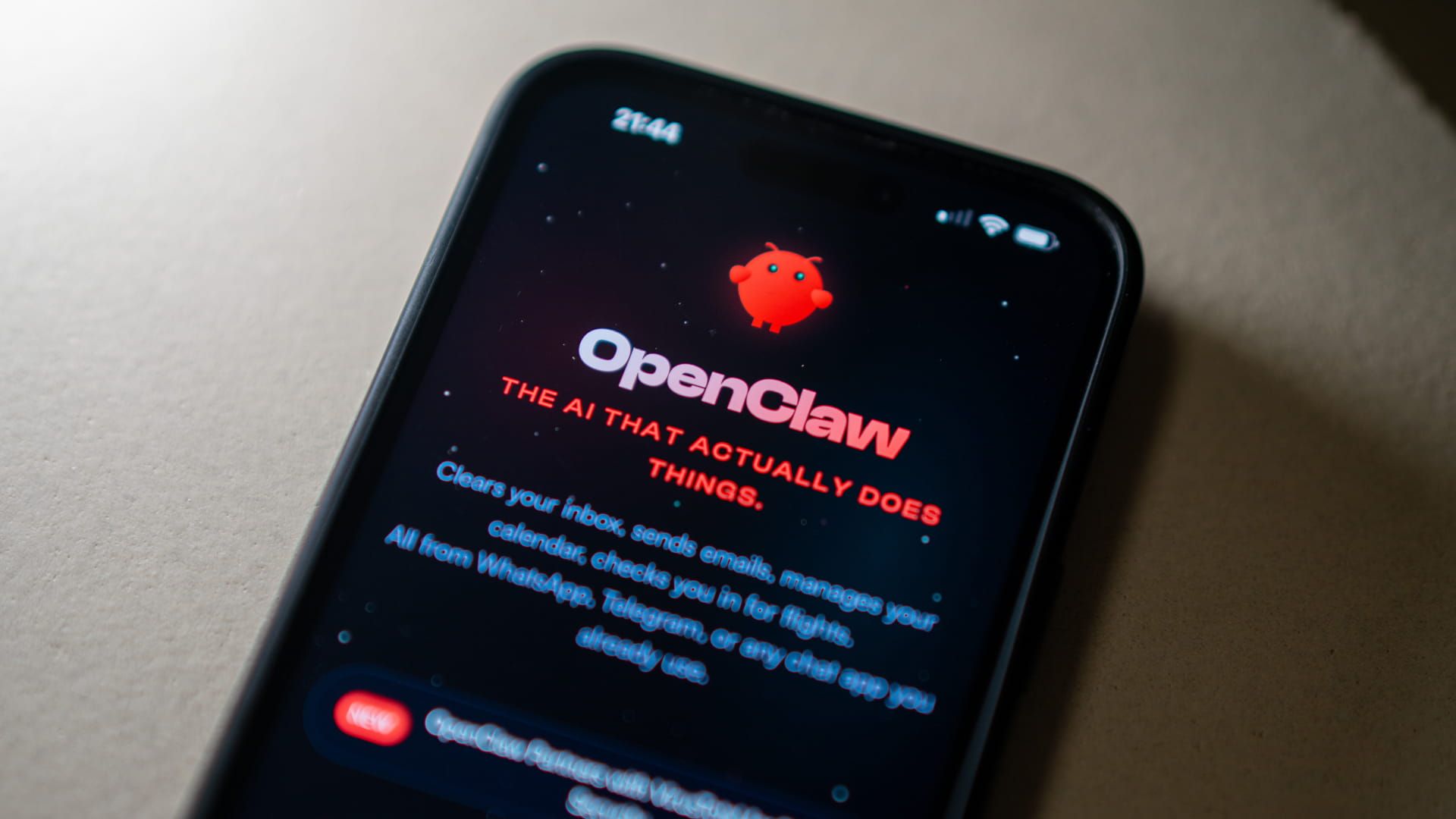
China is getting everyone on OpenClaw, Xiaomi stuns with new LLM that nears western models (link, link)
Chinese local governments are rapidly adopting OpenClaw, a Western-developed AI agent. Shenzhen's Longgang district hosted an OpenClaw conference on March 14 with Moonshot AI, offering free installations, trial access to Kimi Claw, annual subsidies up to RMB 2 million per company, and application awards up to RMB 1 million. Hefei's High-Tech Zone introduced 15 support measures with funding up to RMB 10 million, promoting the "one-person company" business model. Changshu in Jiangsu unveiled 13 similar measures, including free deployment and training. Chinese tech giants Tencent, Huawei, and startups Moonshot and Z.ai have launched domestic alternatives replacing the system's "brain" with Chinese large language models for local data processing to address security concerns.
Xiaomi released MiMo-V2-Pro, a 1-trillion-parameter foundation model led by DeepSeek R1 veteran Fuli Luo, featuring 42 billion active parameters per forward pass and a 1-million-token context window via a 7:1 Hybrid Attention mechanism. The model ranks #10 on Artificial Analysis' Intelligence Index with a score of 49, placing it alongside GPT-5.2 Codex and ahead of Grok 4.20 Beta, while achieving #2 in China and #8 globally. Benchmarks show a 30% hallucination rate (down from 48% in the Flash version) and 77 million output tokens required for full index testing, significantly fewer than competitors. Pricing is set at USD1 per million input tokens and USD3 per million output tokens for contexts under 256K, roughly one-seventh the cost of GPT-5.2 or Claude Opus 4.6, with cache writes currently free. Xiaomi plans to open-source a variant once stable.
Sanofi launches innovation hub in Chengdu, AstraZeneca to build cell therapy hub in Shanghai (link, link)
French pharmaceutical giant Sanofi inaugurated a new innovation and operation center in Chengdu on Thursday, announcing the launch via its Chinese social media platform. The facility is designed to strengthen the company’s research and development capabilities, bolster clinical operations, and improve manufacturing and supply chain services. This strategic expansion underscores Sanofi’s commitment to deepening its operational footprint in China by leveraging Chengdu’s local resources and the city’s growing significance as a regional healthcare hub. The Chengdu center represents a key component of Sanofi’s broader strategy to enhance innovation and operational efficiency within the Chinese market while supporting the company’s clinical and manufacturing infrastructure across the region.
AstraZeneca unveiled plans to build a commercial cell therapy manufacturing hub in Shanghai's Lin-gang Special Area and an R&D center in Zhangjiang High-Tech Park, becoming the first multinational pharmaceutical company with end-to-end cell therapy capabilities in China. These facilities are part of a USD 15 billion investment pledge through 2030 announced earlier this year. The company also announced a separate radioconjugate factory in Guangzhou for actinium-225-based prostate cancer treatments following its Fusion Pharmaceuticals acquisition. With nearly USD 6.7 billion in 2025 local revenue, AstraZeneca is China's largest foreign pharma, operating two global R&D centers and four manufacturing bases. The company also launched a Shanghai-U.K. life sciences collaboration program with the University of Glasgow and King's College London.
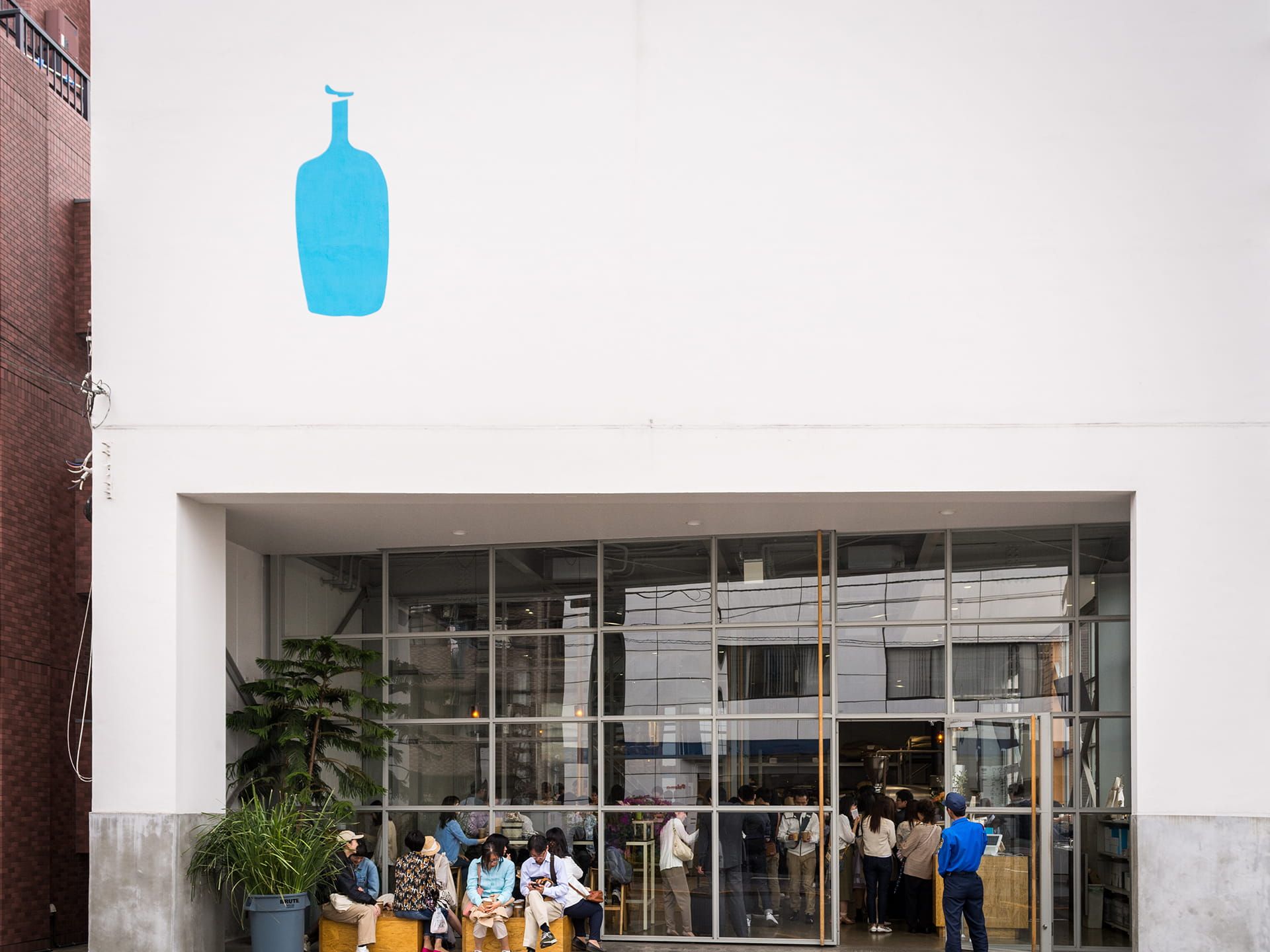
Beijing-based Centurium Capital, Luckin Coffee's controlling shareholder with 53.6% voting rights, has agreed to acquire Blue Bottle Coffee's global retail operations from Nestle for under USD 400 million. Nestle, which purchased a 68% stake in Blue Bottle for under USD 500 million in 2017, will retain the fast-moving consumer goods business. Blue Bottle generated approximately USD 250 million in revenue for the 12 months ended June 30, 2025, USD 150 million from the US and USD 100 million from Asia Pacific, with profitability expected in 2026. The specialty coffee chain operates 140 stores globally as of the end of 2025, including 31 in Asia and 15 in mainland China since entering in 2022. The acquisition supports Luckin's push into premium segments and international expansion. Luckin currently operates over 30,000 stores domestically and approximately 160 overseas, primarily in Southeast Asia.
The Gold Standard for AI News

AI will eliminate 300 million jobs in the next 5 years.
Yours doesn't have to be one of them.
Here's how to future-proof your career:
Join the Superhuman AI newsletter - read by 1M+ professionals
Learn AI skills in 3 mins a day
Become the AI expert on your team
JD.com launched its European e-commerce platform Joybuy on March 16, entering six markets, including the U.K. and Germany, to challenge Amazon and Chinese rivals AliExpress and Temu. Unlike competitors' asset-light marketplace models shipping directly from China, Joybuy operates as a first-party retailer with local warehouses and logistics networks, enabling same-day delivery for orders placed before 11 a.m. and free delivery on U.K. orders over £29. The company also introduced JoyPlus, a £3.99 monthly membership offering unlimited free delivery, undercutting Amazon Prime's £8.99. Following six months of beta testing, the platform features brand stores from L'Oréal Paris and De'Longhi, targeting customers with authentic international brands rather than utilizing the de minimis customs exemption for low-value goods. Joybuy plans to expand its warehousing footprint across Europe step by step to extend same-day delivery coverage.

Dinglong starts mass production at China’s first full-process integrated circuit photoresist plant (link)
Dinglong Holdings has initiated mass production at China's first full-process integrated circuit photoresist plant in Qianjiang, Hubei province, with an annual capacity of 300 tons of KrF and ArF photoresists. The facility integrates the entire production chain from monomer synthesis to finished formulation and localizes key additives, including photoacid generators. The output targets high-end memory chips (3D NAND, DRAM) and logic chips at 14nm and below. Currently, domestic Chinese production accounts for only 3-5% of the KrF market and under 1% of the ArF photoresist market, with Japanese and US suppliers dominating. The plant features production lines for over 30 photoresist types; several have entered stable batch production, while more than half are undergoing customer verification.
Reply