- China Insights Weekly | AI, Innovation, Business & Tech in China
- Posts
- Alibaba Secret Video Model 🎬 McDonald’s, KFC Go Rural 🍔 Unitree Robot Runs 10m/s 🤖
Alibaba Secret Video Model 🎬 McDonald’s, KFC Go Rural 🍔 Unitree Robot Runs 10m/s 🤖
China Insights Weekly for April 13 Unpacking China’s economic and technological advances.


Tomas Kucera & Yereth Jansen
April 13, 2026

Welcome back to China Insights Weekly. Here are some of the key highlights for this week’s edition:
Chinese universities dominate global research rankings, funding surge pays off
China climbs in service exports, digital and ICT lead shift
EV exports surge as global demand shifts, Europe share rises
Energy storage firms expand overseas, global orders accelerate
🚀 Headlines
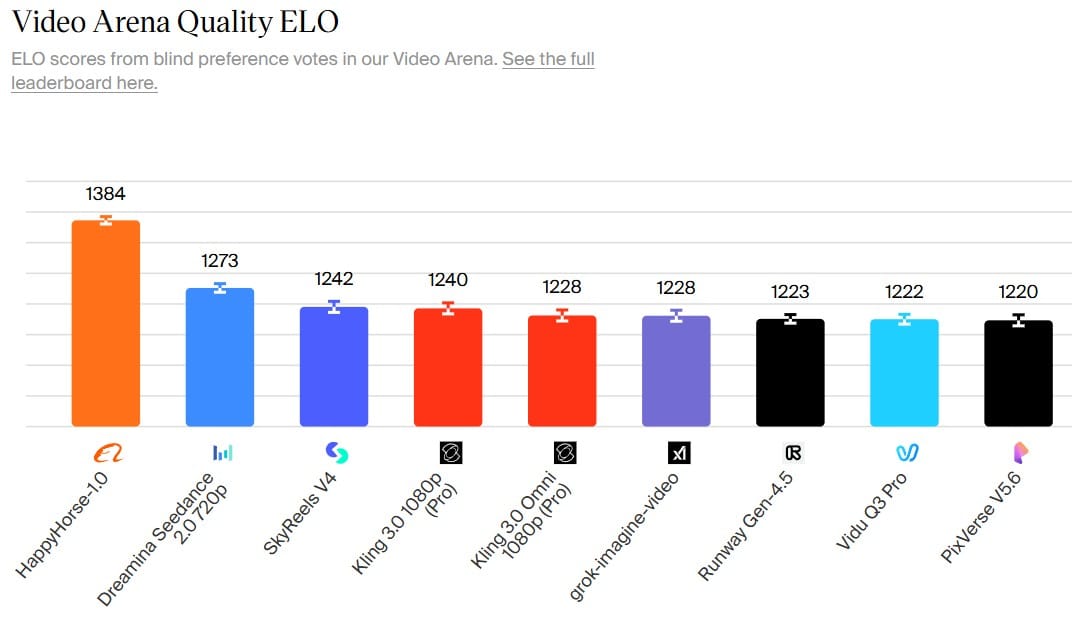
Alibaba has confirmed its authorship of HappyHorse-1.0, an AI video generation model that appeared anonymously on the Artificial Analysis benchmarking platform around April 7 and rapidly climbed to the top of blind-test rankings for both text-to-video and image-to-video generation. The developers revealed via a newly created X account that the project belongs to Alibaba's ATH AI Innovation Unit and remains under development. The reveal comes amid intensifying competition in China's AI sector, with OpenAI recently discontinuing its Sora video generation app and ByteDance pausing its Seedance 2.0 rollout due to copyright disputes with major Hollywood players. On the Video Arena Quality ELO leaderboard, all models are from China-based companies.
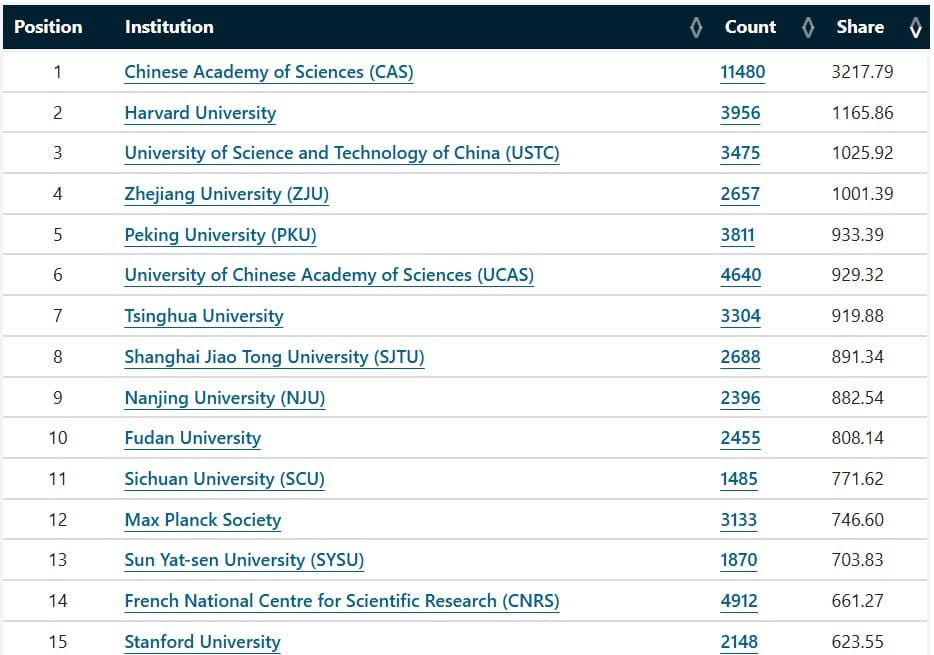
The 2026 Nature Index, released March 25 and covering January 2025–December 2025, confirms China's leadership in high-impact natural science research, with its article count rising 24.5% year-on-year. Nine of the global top 10 institutions are Chinese, one more than last year, led by the Chinese Academy of Sciences (11,480 articles). Among universities, the University of Science and Technology of China ranks 2nd (3,475 articles) just behind Harvard University (3956), followed by Zhejiang University, Peking University, and the University of Chinese Academy of Sciences. China dominates chemistry, physics, and earth sciences, while the U.S. retains an edge in health sciences. Strategic investments underpin this growth: China plans a 10% science funding increase in 2026, with "Double First-Class" universities receiving approximately ¥1 billion annually, and over 12.7 million PhD graduates expected this year.
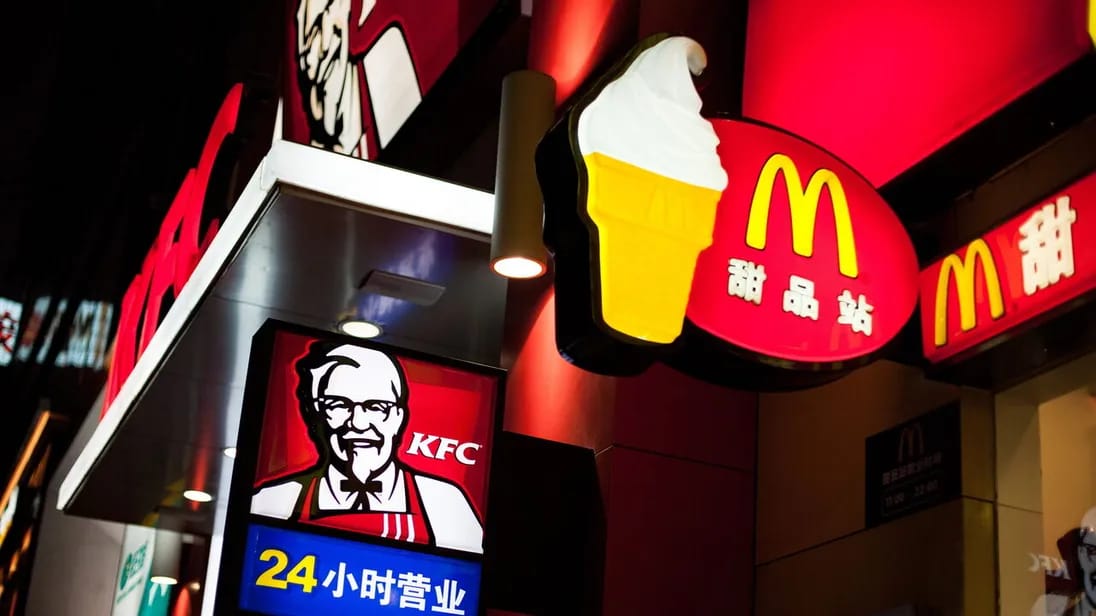
McDonald’s and KFC are growing like wildfire in China’s countryside through local partnerships (link)
Western fast-food chains are aggressively expanding into rural China as urban markets reach saturation. McDonald's plans to add 3,000 outlets to its existing 7,000 locations over the next three years, while KFC intends to add over 4,000 to its 12,600-strong network. Approximately two-thirds of China's population lives outside its 50 largest cities, presenting untapped demand. Market saturation is severe: roughly 70% of KFCs and 60% of McDonald's locations are within a ten-minute cycle ride of another outlet. This rural push is enabled by ownership restructuring; McDonald's China is majority-owned by state-backed Citic Capital, while KFC and Pizza Hut operate through NYSE and HKEX-listed Yum China, spun off in 2016. In their footsteps are Starbucks, which sold 60% of its China business to Boyu Capital in November, and Burger King, which announced a similar deal with state-connected investors. Chinese investors are providing capital and local expertise that Western parent companies lack for navigating smaller cities.
The Gold Standard for AI News

AI will eliminate 300 million jobs in the next 5 years.
Yours doesn't have to be one of them.
Here's how to future-proof your career:
Join the Superhuman AI newsletter - read by 1M+ professionals
Learn AI skills in 3 mins a day
Become the AI expert on your team
China has rapidly ascended the global rankings as an exporter of knowledge-intensive services, climbing from 17th place in 2014 to 6th place in 2024 for digitally delivered services, according to World Trade Organization data. In 2024, ICT service exports reached USD 100 billion, surpassing traditional exports such as toys (USD 82 billion) and footwear (USD 51 billion), while "other business services" exports totaled USD 113 billion, exceeding iron and steel (USD 71 billion) and apparel (USD 85 billion). Construction service exports hit USD 34 billion. This growth stems largely from the Belt and Road Initiative's infrastructure investments and the digitalization of manufactured goods exports, with products like electric vehicles, robots, and solar panels now accompanied by recurring software updates and technical services. China's surplus in "other services" trade exceeded USD 80 billion in 2024, placing it behind only the US, UK, and India. Despite an overall services deficit driven by travel and education shortfalls, knowledge-intensive services have swung from deficit to surplus since 2015.
China EV exports jump 140% to record as fuel prices rise, Chinese carmakers squeeze out Asian rivals in Europe (link, link)
China's electric vehicle and hybrid exports surged 140% year-on-year in March to a record 349,000 units, driven by rising global fuel prices amid the Iran war. BYD accounted for approximately one-third of total exports, with Geely and Chery also ranking among the leading exporters. The spike reflects shifting consumer preferences toward electrified vehicles as fuel costs climb, paralleling Japanese automakers' gains during the 1970s oil shocks. Tesla's Shanghai factory shipments rose 9% year-on-year even as its China sales declined 24%, while BYD's domestic sales plummeted over 40%.
Chinese carmakers are rapidly gaining market share in Europe at the expense of Japanese and South Korean rivals, with EU imports of Chinese-made vehicles surpassing 1 million units for the first time in 2025. Imports jumped 30.7% year-on-year to 1.006 million vehicles, though import value rose only 4% to €13.7 billion (USD 16.1 billion), indicating lower pricing. Chinese-manufactured cars now account for 7% of EU sales, up from 5% in 2024, while Japanese and Korean market shares remained flat at 4% and 3%. BYD outsold Tesla in Europe for the second consecutive month in February with 17,954 registrations versus Tesla's 17,664. Meanwhile, EU passenger car exports to China collapsed 43% in value to €8.3 billion and 42.8% in volume to 159,743 units. China produced nearly 30 million vehicles in 2025, a 10.4% increase, and accounted for over 62% of global car output alongside record-high exports.

Reply